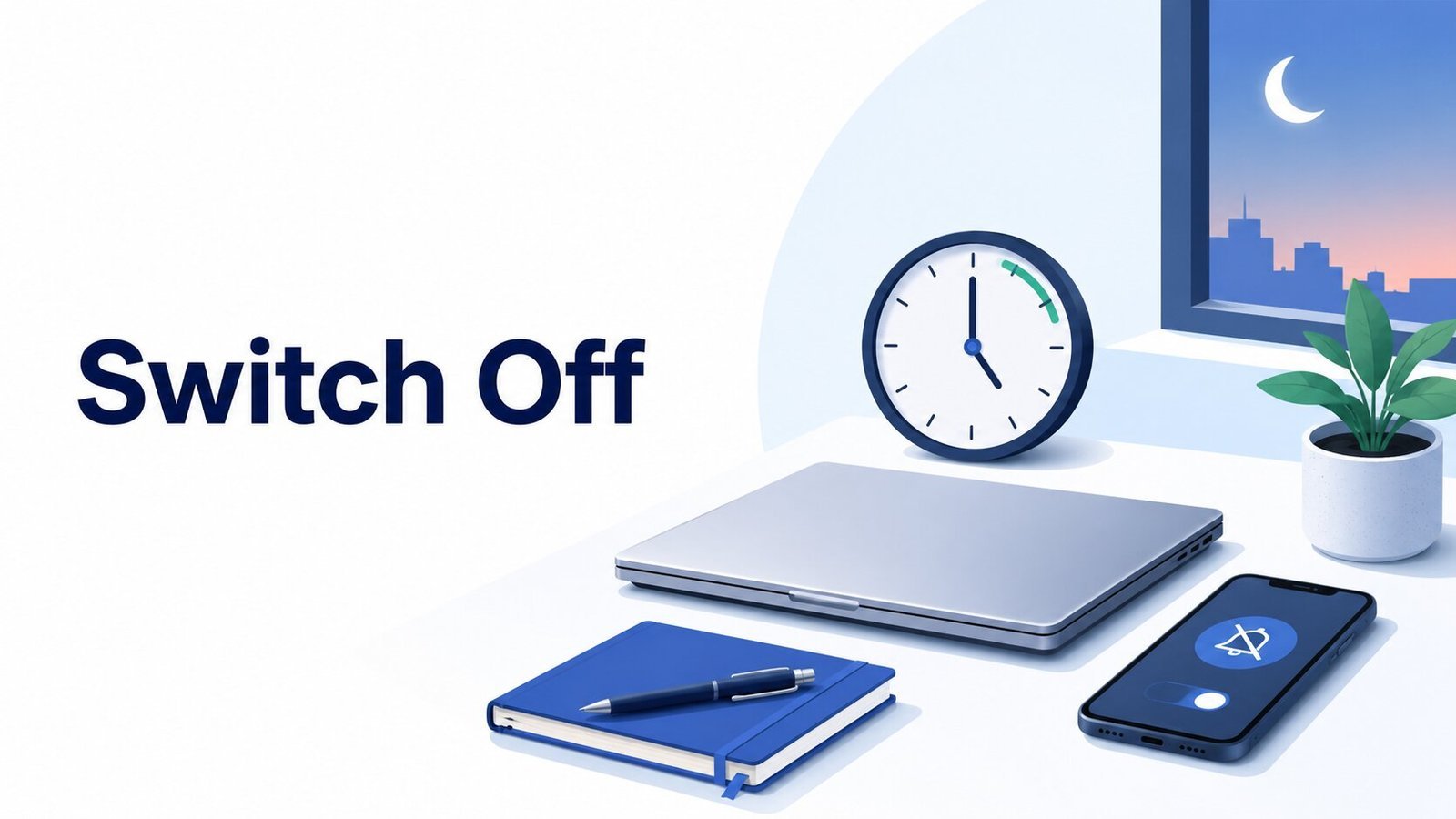
How to Disconnect From Work After Hours and Switch Off

Closing your laptop does not always end the workday. You may still replay a difficult conversation, think about unfinished tasks, or check one more message long after work is supposed to be over.

That constant mental connection makes it harder to enjoy the evening and properly recover before the next day. Disconnecting from work is not about forcing yourself to forget everything immediately. It is about giving work a clear stopping point, reducing the cues that pull you back, and knowing where you will begin again tomorrow.

A clear shutdown process can help you leave work in a more settled state and protect more of the evening for your own life.

Quick Overview: Disconnecting From Work After Hours

  • Record unfinished tasks before logging off so they do not keep circling in your mind.
  • Decide where you will restart tomorrow instead of carrying the full workload into the evening.
  • Silence non-urgent work alerts and make work apps less accessible after hours.
  • Use a consistent transition, such as a short walk, changing clothes, or putting work equipment away.
  • Address workload or availability expectations when work regularly continues beyond your scheduled hours.

What It Means to Disconnect From Work

Disconnecting from work means creating enough distance that your job is no longer directing your attention during personal time. It is more than leaving the office or closing a laptop.

Work may remain active in three different ways:

Physical disconnection

You stop using the workspace, equipment, or environment associated with work. For someone working from home, this may mean putting away a laptop, leaving the desk, or changing rooms.

Digital disconnection

You are no longer monitoring work email, chat, project tools, or notifications. A workday may be technically over, but constant alerts can keep it active in the background.

Mental disconnection

Your attention moves away from tasks, deadlines, problems, and conversations. This does not mean you will never think about work in the evening. It means those thoughts do not repeatedly pull you back into planning, checking, or solving.

Researchers often describe this mental distance as psychological detachment from work. It gives the mind a chance to recover instead of remaining in a low-level state of work readiness.

The aim is not to create a perfect wall between work and personal life. It is to make the boundary clear enough that work has a defined place to stop.

What Is Keeping You Connected to Work?

Switching off becomes easier when you identify what is keeping the workday active. The problem is not always stress itself. Sometimes it is an unfinished task, an easily accessible app, or uncertainty about whether you are expected to respond.

What keeps pulling you backWhat may be happening
Unfinished tasks keep returning to mindYour brain does not trust that the work has been recorded or scheduled
You check email or chat without a clear reasonWork remains easy to access, and you may be anticipating a new request
You work and relax in the same placeYour surroundings provide no obvious signal that the workday has ended
You replay a meeting or conversationThe emotional part of the experience still feels unresolved
You worry about being unavailableExpectations around response times or urgency may be unclear
You continue working because the list is not finishedYou may be using task completion, rather than a defined time, as the end of the day

Unfinished work is a common source of after-hours mental activity. Research on the unfinished-task effect indicates that incomplete work is associated with more work-related thoughts during personal time, which may interfere with recovery.

Digital access creates a different kind of pull. A quick glance at an email subject line may introduce a problem that cannot be resolved until tomorrow, but it can still occupy the rest of the evening.

Sometimes the task is finished, but the emotional part of the day is not. You may have completed every task and still remain mentally at work because of criticism, conflict, uncertainty, or a decision you are second-guessing.

These causes require different responses. An unfinished task needs closure. A notification habit needs a digital boundary. A difficult interaction may need time to process. Unclear availability expectations may need a workplace conversation rather than a more disciplined evening routine.

Close the Workday With a 10-Minute Shutdown Routine

A shutdown routine gives unfinished work somewhere to go before you enter personal time. It does not require completing every task. It creates enough order that you know what remains, what matters next, and when you will return to it.

A research review of interventions designed to improve psychological detachment found that deliberate strategies may help people create better mental distance from work.

Capture Everything That Is Still Open

Write down unfinished tasks, promised follow-ups, waiting items, and concerns that may otherwise resurface later.

Keep the list brief and specific. The purpose is not to redesign your entire task system at the end of the day. You are simply making sure nothing important depends on memory alone.

For example:

  • Send the revised figures to Maya.
  • Follow up on the delayed approval.
  • Review the client’s comments.
  • Ask IT about the access issue.

Once the work is recorded, your mind has less reason to keep rehearsing it.

Give Important Tasks a Clear Next Action

Vague reminders create more mental friction than useful direction.

“Continue presentation” still leaves tomorrow’s starting point unclear. A stronger next action would be:

  • Rewrite slides three and four.
  • Add the updated sales chart.
  • Confirm the final deadline with the project lead.

This small level of detail reduces the effort needed to restart. It also helps unfinished work feel paused rather than abandoned.

Choose Tomorrow’s Starting Point

Decide which task deserves your attention first when the next workday begins.

You do not need to rank every item. Choose one clear starting point based on urgency, importance, or the task most likely to unlock other work. A simple prioritization decision now may prevent the entire list from competing for attention later.

Send Only the Update That Prevents Uncertainty

Before logging off, check whether one short update would stop a task from remaining mentally open.

You might need to:

  • tell a colleague when they can expect a response;
  • note that a task is blocked;
  • update a project status;
  • confirm that a request has been received.

Avoid creating a new round of unnecessary conversation. The update should close uncertainty, not extend the workday.

Close Your Work Tools Deliberately

Save documents, close browser tabs, quit work apps, and clear the immediate workspace. If possible, place your laptop, notebook, headset, or work phone out of sight.

This physical action matters because leaving work tools open makes returning feel effortless. Closing them creates a small but useful point of friction.

Use the Same Closing Cue

Finish with one consistent action that marks the end of work.

It might be checking off a shutdown note, turning off a desk lamp, or saying:

The work is recorded. I know where to begin tomorrow.

The wording is less important than the repetition. Over time, the cue becomes associated with stopping, just as opening a calendar or sitting at a desk may signal the start of work.

Create a Clear Transition Out of Work Mode

A shutdown routine closes the work itself. A transition helps your mind and body recognize that the workday has ended.

The activity does not need to be long or elaborate. What matters is that it creates a noticeable change in pace, location, or attention.

If You Commute

The journey home can become a natural boundary, but only if work is not allowed to follow you through it.

Try using part of the commute to shift away from work input. You might listen to music, take a quieter route, walk for a few minutes, or simply avoid checking messages until you arrive.

This does not mean you must spend the journey deliberately relaxing. The purpose is to stop adding new work demands and allow your attention to move elsewhere.

If you tend to replay the day during the commute, briefly note anything that genuinely needs attention tomorrow. Once it is recorded, return to the journey instead of mentally extending the meeting or conversation.

If You Work From Home

Remote work removes the natural separation created by leaving an office. Research on telecommuting and psychological detachment also suggests that heavier telecommuting may make it harder to mentally separate from work, particularly when other boundaries are weak.

A short replacement commute may help. This could include:

  • taking a walk around the block;
  • changing clothes;
  • putting work equipment into a drawer or container;
  • leaving the work area for another room;
  • changing the lighting;
  • preparing a drink or starting dinner.

When space is limited, the transition can be symbolic rather than physical. Closing a work browser profile, covering the monitor, or clearing the desk may be enough to mark the change.

Try not to move immediately from work tasks to personal browsing in the same setup. Remaining at the desk with the same screen and posture may make the workday feel unfinished, even when the activity has changed.

Keep the Transition Consistent

A different routine every evening may still help, but one repeated cue is easier to associate with the end of work.

Choose a cue that is realistic enough to use on ordinary days. A five-minute walk, a change of clothes, or putting the laptop away may be more useful than an elaborate routine you rarely follow. The transition is not another task to complete perfectly. It simply marks the movement from work time into personal time.

Reduce the Digital Pull Back Into Work

Work becomes harder to leave behind when it remains one tap away. Even when you do not open a message, seeing the notification may be enough to bring a deadline, request, or unresolved problem back into focus.

The aim is not to make yourself unreachable in every situation. It is to remove unnecessary access and make urgent communication clear.

Silence Non-Urgent Notifications

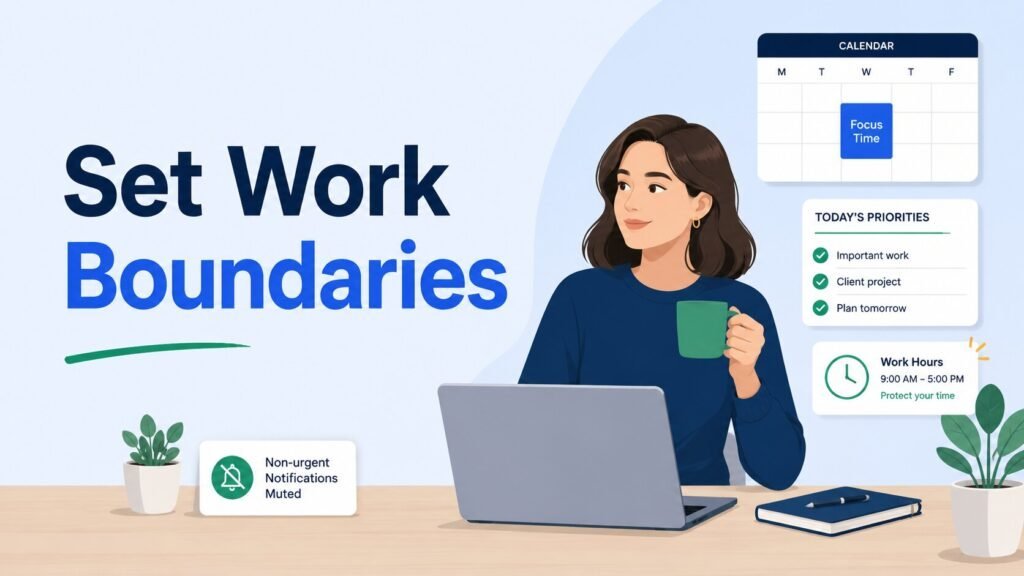
Turn off after-hours alerts for work email, chat, project management tools, and shared documents that do not require an immediate response.

Scheduled focus modes can apply these settings automatically at the end of the workday. This removes the need to decide whether to mute notifications every evening.

A silent phone may not solve the problem if work previews still appear on the lock screen, smartwatch, tablet, or personal computer. Check each device where work accounts are active.

Separate Work and Personal Access

Creating some separation between accounts makes it less likely that you will enter a work tool out of habit.

Depending on your setup, this may include:

  • using separate browser profiles;
  • logging out of work accounts after hours;
  • keeping work apps off the first phone screen;
  • turning off badge counts;
  • using a dedicated work device when one is available;
  • avoiding work email in your personal inbox.

These changes introduce a small pause between the urge to check and the act of checking. That pause gives you a chance to decide whether opening the app is necessary.

Define What Counts as Urgent

People often keep checking because they are unsure whether something important might arrive.

Clarify:

  • which situations require an after-hours response;
  • who may contact you about them;
  • which channel they should use;
  • how quickly you are expected to respond.

For example, a phone call from an on-call manager may signal a genuine issue, while an email or project comment can wait until the next work period.

Clear expectations support healthier asynchronous communication because sending a message does not automatically mean the recipient must respond immediately.

Replace the Checking Habit

Sometimes the trigger is not a notification. It is a familiar moment, such as waiting for dinner, sitting on the sofa, or picking up your phone before bed.

Notice when checking usually happens, then give that moment a different action. You might open a personal reading app, start a playlist, message a friend, or leave the phone in another room for a short period.

The alternative should be easy. A habit is less likely to change if the replacement requires more effort than opening the work app.

Avoid “Just One Quick Check”

A brief check may introduce a problem that cannot be resolved until the next day. You are then left with the mental load but no practical way to finish the work.

Before opening a work tool, ask:

Can I take meaningful action on this now, and am I responsible for doing so?

If the answer is no, checking is unlikely to provide useful closure. It may simply restart the workday.

What to Do When Work Thoughts Return

Thinking about work after hours does not mean your shutdown routine has failed. A reminder, concern, or difficult interaction may still surface. What matters is how you respond when it happens.

Instead of following every thought back into work mode, identify what kind of thought it is and give it the smallest useful response.

If It Is a Reminder

A forgotten task may keep repeating because your mind is trying to protect you from losing it.

Add the reminder to your usual work list, then return to what you were doing. Avoid opening several tools or turning one thought into a new work session.

For example:

  • Ask Jordan for the revised schedule.
  • Add the missing expense to the report.
  • Confirm the meeting room tomorrow.

You do not need to open several work apps or reorganize the entire task list. Capturing the reminder is enough.

If It Is an Unfinished Decision

Some thoughts return because the next step is unclear.

Instead of trying to solve the full issue at night, record what needs to happen next:

  • Review the latest figures before deciding.
  • Ask the project lead which deadline takes priority.
  • Compare the two options during tomorrow’s planning block.

A clear next action gives the decision a place in the next workday.

If You Are Replaying a Difficult Interaction

A tense meeting or uncomfortable comment may remain active even when no task is unfinished.

Pause and identify what is keeping the interaction alive. Are you worried about how you were perceived? Do you need clarification? Is there a conversation you may need to continue?

Write one factual note about what happened and one possible next step. Avoid reconstructing the exchange repeatedly or preparing several imaginary responses.

For example:

I felt dismissed when the deadline concern was interrupted. Tomorrow, I will ask for ten minutes to explain the risk clearly.

This turns emotional replay into a specific choice without requiring you to resolve the situation that evening.

If You Are Trying to Solve Tomorrow’s Problems Tonight

Planning may quietly turn into worry when you keep comparing options without enough information to decide. Record the question or trade-off, then leave the decision for the next work period.

If It May Be Genuinely Urgent

Use the communication process already agreed upon at work.

A real emergency should have a defined signal, such as a call from a specific person or an alert from an on-call system. You should not need to monitor every email and chat thread to discover whether something urgent has happened.

When expectations are unclear, stronger workplace boundaries may be necessary so routine messages do not keep personal time permanently open.

A useful response for most returning thoughts is:

Capture it, assign it a next time, and return to your evening.

The purpose is not to suppress the thought. It is to show your mind that the issue has been noticed and does not need to be handled immediately.

Choose the Right Kind of Recovery After Work

The most helpful way to unwind depends on what the workday has taken from you. After hours of sitting, your body may need movement. After constant decisions or meetings, you may need fewer demands. If remote work has been isolating, quiet time alone may not provide the change you need.

Use your current state to choose a suitable activity:

How you feel after workWhat may help
Physically restlessWalking, stretching, exercise, or an active household task
Mentally overloadedA familiar meal, quiet music, light reading, or another low-decision activity
Stuck on a work problemGardening, drawing, puzzles, music, or another absorbing hobby
Emotionally tenseJournaling, breathing exercises, a supportive conversation, or quiet time
Socially drainedTime alone without messages, requests, or pressure to respond
Isolated after remote workA shared meal, phone call, class, or low-pressure social activity
Flat or unmotivatedA small enjoyable activity with a clear beginning and end

Move When Your Body Still Feels Stuck at Work

A day of sitting and screen use may leave you tense or restless. A walk, gentle stretching, exercise, or an active task at home can create the physical change missing from the workday.

The activity does not need to be intense. It only needs to shift your body out of the position and pace associated with work.

Reduce Demands When You Are Mentally Drained

After a day filled with decisions, another complicated plan may feel like more work. Choose something familiar that requires little preparation or problem-solving.

A simple meal, light reading, music, or a familiar program may provide more relief than an ambitious evening schedule. Rest does not need to produce a visible result.

Choose Something Absorbing When Work Thoughts Persist

Passive activities sometimes leave enough mental space for work problems to continue in the background. A hobby that requires gentle attention may give your mind a more complete change of focus.

Cooking, gardening, playing an instrument, crafting, or following a puzzle can hold your attention without creating the pressure of another performance target.

Match Social Time to Your Energy

If you have spent the day in meetings or responding to messages, a period of quiet may help you recover. You do not need to remain available simply because the workday has ended.

If you have worked alone, connection may be more restorative. A call, shared meal, walk with someone, or regular group activity can provide the human contact missing from the day.

Keep Recovery From Becoming a Second Shift

You do not need to exercise, cook, meditate, socialize, and prepare perfectly for tomorrow every evening. Choose one or two activities that fit your energy and circumstances.

A useful after-work routine should make personal time feel lighter, not give you another list to complete.

When Disconnecting Is Not Only a Personal Habit

Personal habits help only when the workday is allowed to end. If your workload regularly exceeds the available hours or your workplace expects constant access, the problem cannot be solved by a better evening routine alone.

If You Are Expected to Be Available After Hours

Some roles include formal on-call responsibilities. Others develop informal expectations in which employees monitor messages because no one has clearly defined what requires an immediate response.

Try to clarify:

  • what qualifies as urgent;
  • who is responsible at a given time;
  • which communication channel should be used;
  • how quickly a response is expected;
  • who provides backup when the primary contact is unavailable;
  • what should wait until the next workday.

A defined emergency process makes it easier to ignore routine email and chat notifications without worrying that you will miss something critical.

If you are not formally on call, frequent evening messages do not automatically mean you must answer them immediately. Teams that use clear response windows and thoughtful asynchronous communication allow people to send information when convenient without keeping everyone continuously available.

If the Workload Does Not Fit Within the Workday

Regularly working late may point to competing priorities, unrealistic deadlines, understaffing, or too many tasks being treated as equally urgent.

Before extending your hours again, identify what cannot reasonably be completed and what decision is needed. A conversation with a manager may be more productive when it focuses on priorities rather than simply stating that you are busy.

For example:

I can complete the client revisions or finish the monthly report by Thursday, but not both at the expected standard. Which should take priority?

This gives the other person a clear trade-off to address. It also prevents you from silently absorbing every additional request.

Better task prioritization at work may help when the issue is an unclear sequence. It will not create enough capacity when the total workload is unrealistic.

If You Feel Guilty for Being Unavailable

Guilt may appear even when no one has directly asked you to remain online. You may worry that a delayed response makes you look unhelpful, uncommitted, or less dependable.

Consider whether the expectation is explicit or assumed. Look at normal response practices, your role requirements, and what has actually been communicated.

When expectations remain unclear, agree on practical boundaries rather than relying on guesswork. This may include a usual response window, a defined end time, or a separate channel for genuine emergencies.

Setting boundaries at work is not the same as refusing to cooperate. Clear boundaries help others understand when you are available and how to reach you when a matter truly cannot wait.

If After-Hours Work Is Affecting the Rest of Your Life

Pay attention when work regularly disrupts sleep, relationships, meals, personal responsibilities, or your ability to relax. When the pressure begins during working hours, identifying the underlying causes of stress at work may be more useful than relying only on an evening routine.

A temporary busy period is different from an ongoing pattern with no realistic end. Documenting repeated late requests, changing deadlines, or excessive workloads may help you discuss the pattern more clearly with a manager, HR representative, or other appropriate workplace contact.

If work-related stress continues to affect your mood, sleep, health, or daily functioning, support from a qualified healthcare or mental health professional may also be appropriate.

Disconnecting is partly a personal habit, but it also depends on whether your workload, role, and workplace culture leave room for personal time.

Build Your Personal After-Work Disconnect Plan

You do not need to change every habit at once. A simple plan is easier to repeat and more likely to survive busy days.

Choose one action for each part of the transition:

Part of the planExample
Shutdown actionWrite tomorrow’s first task before logging off
Digital boundarySilence work chat and email notifications after 6 p.m.
Transition cueTake a 10-minute walk or change clothes
Recovery activityCook, stretch, call someone, or spend time on a hobby
Response to returning thoughtsWrite the thought down and assign it to tomorrow

Your version should match the way work currently follows you into the evening.

If unfinished tasks are the main problem, strengthen the shutdown routine. If you keep reopening apps, focus on digital access. If the workday ends without a clear shift in pace, make the transition more visible.

Start with the smallest change that removes the most friction. For example:

Before I log off, I will write down unfinished tasks and choose tomorrow’s first action. After that, I will silence work notifications and take a short walk.

Use the plan for several days before adding more steps. Keep the plan simple enough to repeat on demanding days. The clearer the stopping point, the less likely work is to occupy the rest of the evening.

End-of-Day Check

A Simple Work Shutdown Review

Before ending the workday, use these questions to close open loops and make tomorrow easier to begin.

  • Have I written down unfinished tasks?
  • Does tomorrow have one clear starting point?
  • Have I sent any update someone is waiting for?
  • Can I close work apps and notifications now?

FAQs About Disconnecting From Work

How do I stop thinking about work after work?

Write down unfinished tasks and decide when you will return to them. If a thought comes back later, capture it briefly instead of reopening work.

How do I stop checking work email after hours?

Turn off non-urgent alerts, log out, and make work email less accessible. It also helps to define which situations genuinely require an immediate response.

How do I switch off after work when working from home?

Close work programs, put equipment away, and use a simple transition such as a walk, shower, or change of clothes.

What should I do if my manager expects replies after work?

Clarify what counts as urgent, which channel should be used, and how quickly you are expected to respond. Clear expectations are more reliable than guessing.

Is it normal to think about work after hours?

Occasional work thoughts are normal. It may need more attention if they regularly affect sleep, mood, relationships, or your ability to relax.