
You can know what needs to get done and still struggle to stay with it. A message appears, another task comes to mind, a meeting cuts the morning in half, and suddenly you are reopening the same piece of work for the third time.
Learning how to focus at work is not only about getting better at ignoring distractions. Sometimes the task is unclear. Sometimes too many things are competing for your attention. Sometimes the workday itself does not leave enough usable time for concentrated work.
A better approach is to find the source of the problem first. You do not need a perfectly quiet day. You need enough protected attention to move important work forward and a reliable way back when the day pulls you away.
Quick Overview
- Identify what is breaking your focus before choosing a solution.
- Start with one clear outcome and a focus window you can realistically protect.
- Reduce predictable distractions and capture unrelated thoughts instead of following them.
- Use a clear restart point when interruptions happen so returning takes less effort.
What Does It Mean to Focus at Work?
Focusing at work means keeping your attention on the task you chose long enough to make meaningful progress before something else takes over.
That does not require hours of uninterrupted concentration. A focused period might mean reviewing a spreadsheet, drafting part of a report, solving a project problem, or preparing a client update without repeatedly switching to unrelated work.
Focus is also broader than deep work. Deep work usually refers to demanding tasks that benefit from sustained concentration. Everyday focus includes that kind of work, but it also matters for ordinary tasks that become harder when your attention keeps moving.
What breaks your focus can change from one workday to the next. Treating every problem as a distraction problem makes it easy to reach for the wrong solution.
This guide focuses on workplace habits and conditions that can make concentration harder. Persistent difficulty concentrating can also have causes that productivity routines are not designed to address.
Start by Finding What Is Breaking Your Focus
Before blocking websites, setting a timer, or rearranging your workspace, look at what usually happens when your attention leaves the task.
A simple Focus Breakdown Check can help you choose where to start.
| What keeps happening? | Likely problem | First place to look |
|---|---|---|
| You keep deciding what to work on | Direction | Clarify the next outcome |
| Notifications, tabs, or your phone keep pulling you away | Access | Reduce easy access to distractions |
| Meetings and requests leave no usable stretch | Fragmentation | Protect realistic focus time |
| Unrelated tasks keep coming to mind | Self-interruption | Capture the thought instead of switching |
| Returning after a switch takes too long | Restart | Leave a clear next-action cue |
Those situations may look similar because they all interrupt progress, but they call for different responses.
A longer focus timer will not repair a calendar broken into ten-minute gaps. Closing your inbox will not help much if you still do not know what the next useful outcome is. And a better restart note will not solve a task that should never have been your priority in the first place.
The point of the check is not to label the problem. It is to avoid spending effort on the wrong fix.
Build a Focus Session That Can Survive a Normal Workday
A useful focus session does not need an elaborate routine. It needs a clear target, enough realistic time, and fewer easy ways for your attention to leave the work.
Define One Observable Outcome
Vague tasks create more decisions while you are already trying to concentrate.
Consider:
Work on report
You still have to decide which part to tackle, how far to go, and what counts as progress.
A clearer target would be:
Draft the findings section and mark any missing figures.
Or:
Review the client proposal and resolve the comments in sections one and two.
An observable outcome gives the session a direction. You can tell what you are trying to move forward without repeatedly stopping to decide what comes next.
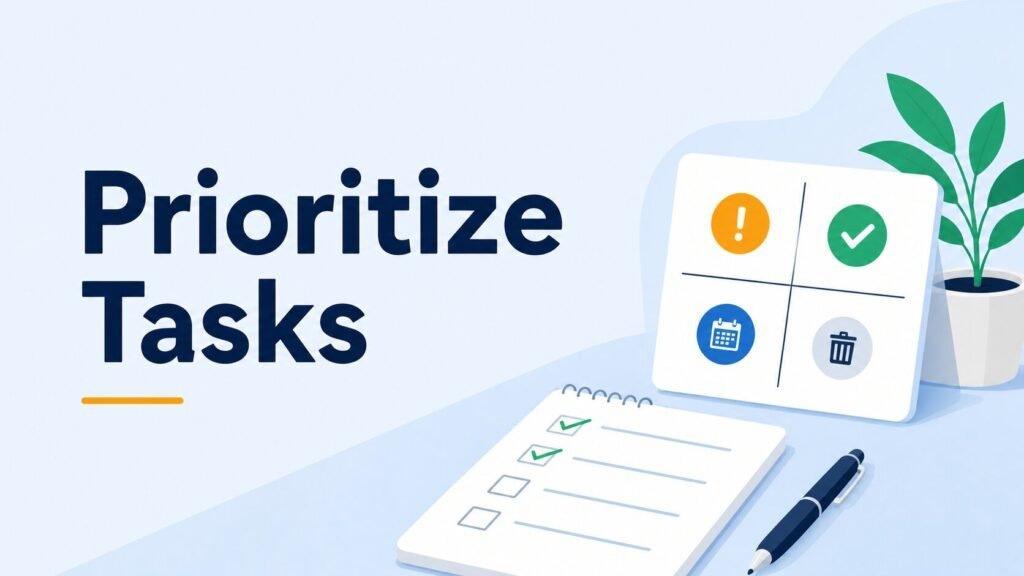
If several tasks are competing for the same time and you cannot tell which one deserves it, settle that question first. Your approach to prioritizing tasks at work should decide what deserves your attention before you try to protect that attention.
Choose a Focus Window You Can Actually Protect
There is no universal focus-session length that fits every job.
A long block may work well on a quiet project day and fail completely on a morning filled with meetings and live requests. A shorter period that actually survives your calendar can be far more useful than a longer one that keeps getting broken apart.
Choose the window based on:
- the work you want to move forward;
- how much setup the task requires;
- what is already fixed on your calendar;
- how interruptible your role normally is.
If the task needs more room than the day currently gives it, time blocking can help you find realistic calendar space.
The goal is not to protect the longest possible period. It is to create enough uninterrupted time for the work to move.
Remove Predictable Interruptions Before You Start
Some interruptions are unavoidable. Others are easy to predict because the same things pull you away every time.
If an open inbox, visible chat window, phone alert, or unrelated browser tab routinely wins your attention, change that condition before you start.
That might mean muting nonessential notifications, closing your inbox, moving unrelated tabs out of sight, or opening the files you already know you will need.
Research from Microsoft on instant-messaging interruptions found that interruptions could disrupt ongoing computer tasks, and their timing could affect memory for the primary task. The study examined specific computer tasks rather than every kind of workplace interruption, so it should not be treated as a universal measure of what each notification costs.
You do not need to strip every possible distraction from the environment. Start with the ones that repeatedly pull you away.
Capture Competing Thoughts Without Following Them
Not every interruption comes from another person or a device.
You may be halfway through a paragraph when you suddenly remember an email you need to send, a number you should check, or something that belongs on another project.
The thought may be important. It still may not need action right now.
Keep a small capture note beside your work. Write down enough to trust that you will not forget the thought, then return to the task.
For example:
- Email Maya about the revised date.
- Check the Q4 forecast.
- Add the pricing note to the launch brief.
The note is not meant to become another full task-management system. Its only job is to stop an unrelated thought from turning into an immediate switch.
If those captured items form a recurring type of work, task batching may help you handle them together later. During the focus period, the simpler goal is to keep the current task from losing its place.
BEFORE YOU START
A Quick Focus Check
Use these questions right before a focus period. They help you catch the most likely problem before it turns into another interruption.
- What specific outcome do I want from this focus period?
- How much uninterrupted time can I realistically protect?
- What is most likely to pull my attention away?
- Where will I capture unrelated thoughts instead of following them?
- If I get interrupted, what will help me restart quickly?
How to Get Back Into Focus After an Interruption
Even a well-prepared focus session will sometimes get interrupted.
A meeting starts. A coworker needs something. A customer problem appears. New information changes the day.
Trying to prevent every interruption is unrealistic. Making the return easier is often more useful.
Leave a Restart Point
When you have to stop unfinished work, record two things if you can:
where you stopped + what you need to do next
Instead of:
Continue report.
write:
Findings section is drafted. Next: compare June and July churn figures and write the explanation below the chart.
That small note saves you from having to reconstruct the whole task when you come back.
Research by Sophie Leroy on attention residue found that people can have difficulty fully shifting their attention away from unfinished work, and performance on a subsequent task can suffer after a switch.
That research does not establish a restart note as a proven remedy. The note is simply a practical way to leave clearer context for yourself so you have less to reconstruct later.
Return Before You Reopen Everything Else
When you come back, reconnect with the task before opening unrelated work unless something genuinely needs your attention first.
- Read the restart note you left.
- Reopen only the files or information needed for the next action.
- Begin that action before checking unrelated messages or tasks.
The sequence is simple, but it gives the original task a chance to regain your attention.
If you reopen email, chat, several tabs, and another project first, the return can quickly turn into another round of switching.
If the Interruption Changed the Priority
Sometimes an interruption brings information that genuinely changes what matters.
A client issue becomes urgent. A manager moves a deadline. Another task is now blocking several people.
In that situation, do not force yourself back to the original work simply because it was on the plan.
Confirm what now deserves attention. If the priority has changed, update the plan and leave a clear restart point for the task you are moving away from.
Focus should protect the right work, not make the day rigid.
When Your Workday Is Too Fragmented for Focus
Sometimes the problem is not your ability to concentrate. The workday is simply not giving concentration enough room.
Back-to-back meetings can break the calendar into small pieces. Messages may need attention throughout the day. Customer-facing work may create frequent live requests. By the time you settle into something demanding, the next commitment is already close.
Another concentration technique will not fix that kind of problem.
Look instead at where the fragmentation is coming from. Some meetings may be unnecessary or badly placed. Routine communication may be scattered across the day when part of it could happen asynchronously. Repetitive administrative work may be interrupting larger tasks one item at a time.
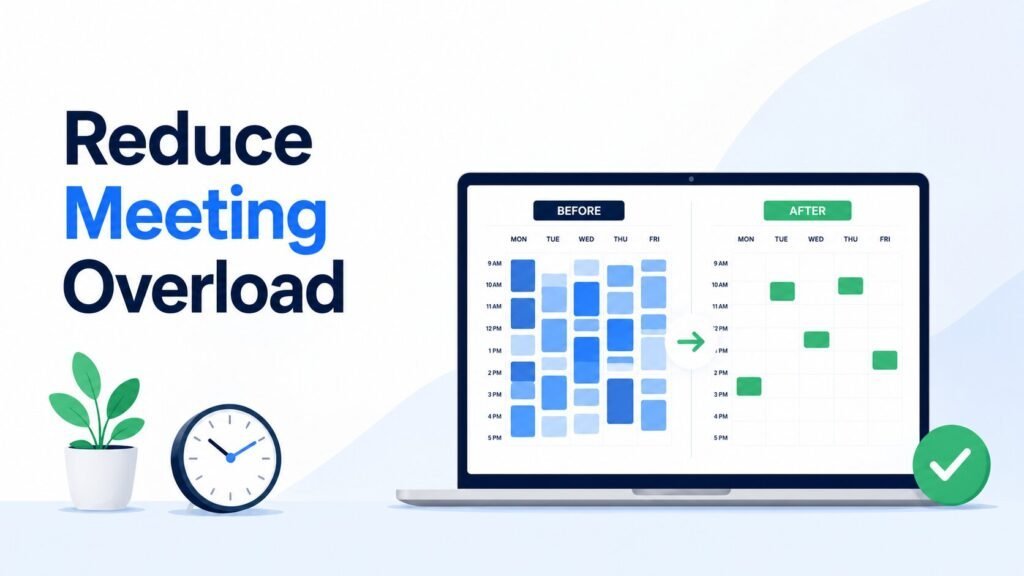
Reducing meeting overload, grouping compatible routine work, or using asynchronous communication where an immediate conversation is not necessary can create more usable space without cutting off collaboration.
You do not need to eliminate every interruption. The aim is to stop avoidable fragmentation from consuming all the time that could support focused work.
Adjust Your Focus System Based on What Keeps Happening
A focus routine should make important work easier to move forward. If the same difficulty keeps showing up, treat it as information about what still needs to change.
| What you notice | What to adjust |
|---|---|
| You keep switching even after choosing one task | Make competing work less accessible or clarify the intended outcome further |
| Focus periods keep getting interrupted | Try a more realistic time or address availability expectations |
| Starting still feels difficult | Make the first outcome smaller and more concrete |
| Returning after an interruption takes too long | Leave a more specific restart note |
| You stay focused but important work still does not move | Recheck whether you are protecting the right task |
| Coworkers regularly wait too long while you focus | Adjust response windows or availability expectations |
That last signal is easy to miss.
A focus routine can work well for you while quietly creating delays for everyone else. If that happens, the answer may be clearer availability, a different time of day, or more realistic expectations about when routine messages will receive a response.
A workable system protects concentration without pretending the rest of the job does not exist.
When a Lighter Focus Routine Makes More Sense
Some jobs are built around frequent availability. Customer support, operations, frontline management, and similar roles may never offer long stretches of uninterrupted time.
That does not mean focused work is out of reach.
A smaller protected window, one clear outcome, fewer avoidable distractions, and a useful restart point may be enough to keep important work moving between the demands of the day.
The goal is not to make an interruption-heavy job behave like a private study session. It is to create a little more continuity where the work allows it.